
The Lusaka Row
remarks by a departing Ambassador

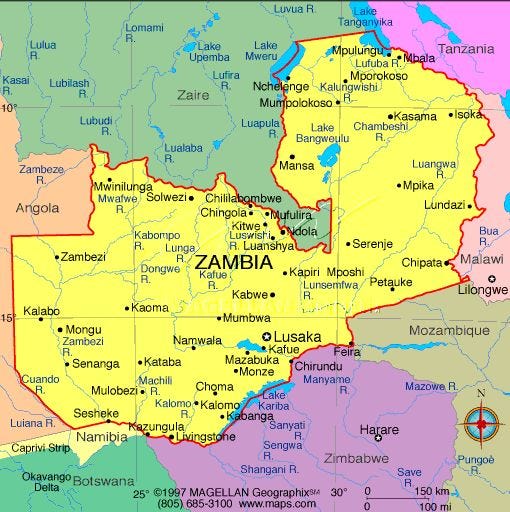
On April 30th Michael Gonzalez the U.S Ambassador to Zambia was formally recalled back to Washington by the State Department.
This recall is not just problematic. It also returns the lack of diplomatic urgency in Africa to a potential National Security Risk as well as a sign of continued apathy in the confirmation process in the U.S. Senate.
The Former Ambassador was a holdover from the Biden Administration. Sadly, that fact will raise some alarms in the pro-Trump camp as they will ask why he wasn’t replaced during the early days of the second term. Some will applaud the decision to keep him on for an extended period as it will be seen as a sign of consistency from a hyper-polarized political climate here in Washington.
There is one chilling number to cite. According to the webpage of the American Foreign Service Association, there are 27 Embassies in Africa that as of one week ago do not have an ambassador. This list includes several countries that are nominally close allies of Washington such as Kenya and Egypt. This list also includes Nigeria and Burundi as well.
So why is there such fallout over Zambia? The country is part of the Lobito Corridor process that was a key plank of the Administration’s Foreign Policy in 2025. Reporting from Zambian Media suggests that there was a change in the relationship.
We know that Zambia was one of the countries that was offered the deal of having U.S. investments in the Health Care sector in the range of 2 billion USD for access to critical minerals in Zambia. Zambia is one of the most important sources of both copper and uranium which makes the country an important country for sourcing components for green energy sources.
A short time after the departure of Ambassador Gonzalez the Zambian Government announced that it was rejecting the deal. One of the grounds that announced for turning down this deal was that the Zambian Government was concerned regarding the data security for their citizens. One of the concerns that will remain unaddressed is Aid from the US in the healthcare sector will be operating without a formal structure in the country. This has the potential to place the delivery of essential services at risk.
Some of the services that are expected to be impacted include HIV, malaria, maternal and child health, and epidemic preparedness.
This is not the only source of tension between Lusaka and Washington. Corruption is an issue that that drives activists crazy. Earlier this year, Transparency International released its finding on corruption around the world for the year 2025. Zambia placed 99th on that scale which was a decrease from 2024. One key issue is that publicly elected officials are not required to disclose annually their assets and liabilities. One Zambian Newspaper reported that without this level of transparency, the fight against corruption risks losing credibility, regardless of how many arrests or convictions are recorded.
One point of contention lies within the remarks given by Ambassador Gonzalez at a reception before he left Lusaka. He cited in his remarks that Zambia loses 4 billion USD annually to East Asia using dirty money. The Zambian Government criticized these remarks and not just for being delivered at a reception but also violating the Vienna Convention on Consular Affairs.
Part of the solution to this problem lies in Washington, and it’s twofold. The Administration needs to send a nominee to the Senate Foreign Relations Committee, and then the Committee needs to move past is sloth and confirm this individual.