
Still a Problem
Senate Resolution on Eritrea

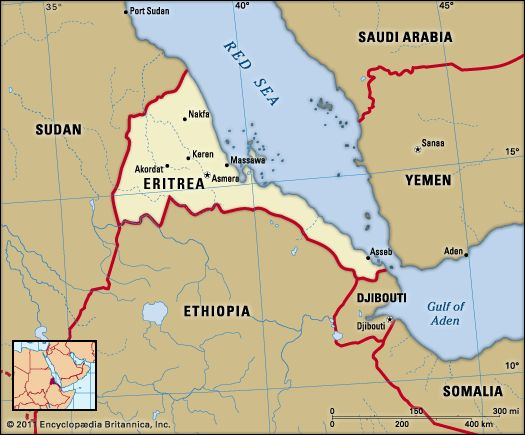
Earlier this month the U.S. Commission for International Religious Freedom released its annual report for events that occurred in 2025. As expected, Eritrea was once again recommended to be designated as a Country of Particular Concern (CPC) as defined by the Frank Wolf International Religious Freedom Act (IRFA).
The designation itself has been a challenge. The U.S. State Department has not made any formal designations of CPCs or placing countries on the Special Watch List (SWL). Apart from Nigeria which was designated by President Trump last fall it is the position that the countries that were designated in 2023 still retain their position. That year Eritrea was designated as a CPC.
What are the conditions for Religious Freedom within Eritrea? In the words of USCIRF, they are extremely poor. How do we define “extremely poor”? The Eritrean Government has registered and officially recognizes only four religious groups: Sunni Islam, the Tewehedo Eritrean Orthodox Church, the Roman Catholic Church and evangelical Lutheran Churches. These are the only groups allowed to operate within the country. No additional registrations took place last year.
During the year the government targeted specific communities including Baptists, Pentecostals, and other evangelical Christians. The government also encouraged community surveillance of nontraditional Protestant Christians.
One of the key recommendations made by the Commission was that the U.S. Congress highlight religious freedom issues in Eritrea with an emphasis on FoRB detainees and prisoners through legislation, briefings, delegations and other activities.
It is worth noting that that challenge has been answered by the Senate.
On July 31st,2025 Senator Richard Durbin (D-Ill) introduced a resolution on behalf of himself and Senators Chris Coons (D-DE) and Adam Schiff (D-CA) S Res 350
The long title of the resolution is self-explanatory. It is Recognizing widespread decades-long human rights abuses in Eritrea, including indefinite imprisonment, inhuman prison conditions, and the absence of democratic institutions and expressing support for the rights and freedom of the Eritrean people.
The resolution points out several key areas where democratic norms are seriously lacking.
President Afwerki yields de facto control over legislative functions. He has yielded that power since being declared the first post-independence President in 2013. The National Assembly has not had a formal session since 2002. The country has not had any elections since 2013.
Another concern that this resolution seeks to address is International Oversight over the human rights climate in the country. Last year the country organized an effort at the UN Human Rights Council in Geneva to end the mandate of the Special Rapporteur to monitor the human rights situation in the country. The Council not only rejected the request by Asmara but also extended the mandate for another year. When that debate takes place again it is imperative that the mandate be extended.
There is one thing working against the resolution in the U.S. Senate. That is the time. Senator Durbin has announced that he is not seeking reelection and is retiring at the end of the year.
Not only if it doesn’t pass this year, but it will also have to be reintroduced in the next Congress. The retirement of Senator Durbin also means that if it is to be reintroduced in the next Congress, someone else will have to introduce it. If that route is necessary, it should be expected that Senator Coons or another Senator with African experience could step up and reintroduce it.
The diaspora here in the United States are concerned over what is happening to their families back home and they want to see something in Washington done to address their concerns.