
Observing Shadows
Looking for Russia's Shadow Fleet

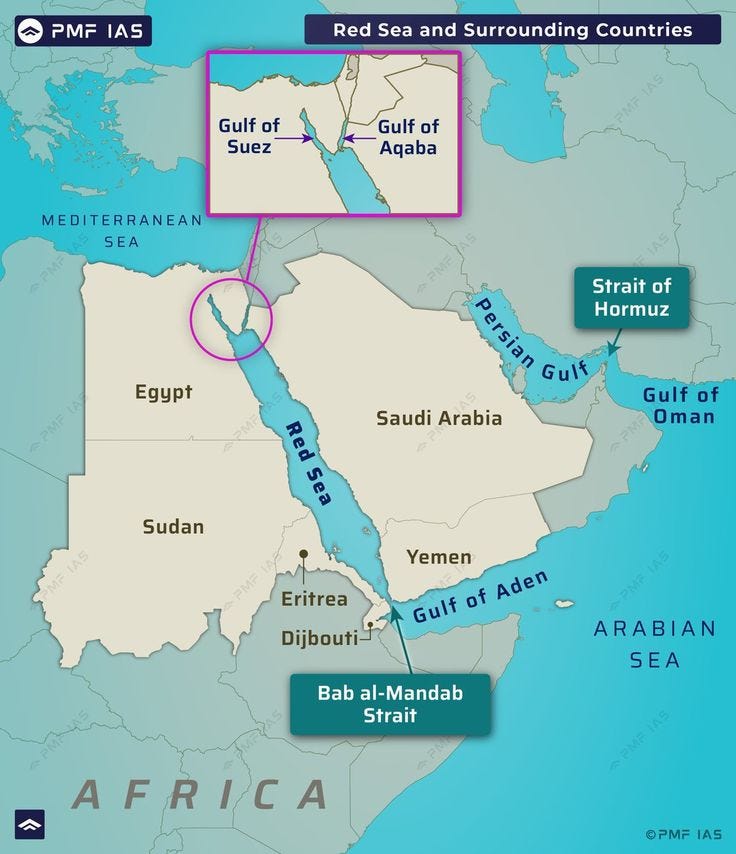
It appears that the European Union (EU) is once again making a concerted effort to keep tabs on the Russian Shadow Fleet. This effort will be focused on some key choke points that affect not just Global Security but also some African Flashpoints as well. This will be conducted by Naval assets that are already deployed off Africa.
It has been announced that naval assets assigned to Operation Atalanta would be joining their counterparts assigned to Operation Aspides in recent weeks to observe the estimated 400 to 600 vessels that Russian President Vladimir Putin uses for crude oil and fuel exports. There are additional estimates that place the total number of ships in this fleet at around 1,400. Currently the EU, Great Britain and the United States have sanctioned between 120 and 180 ships.
Speaking to Defenceweb a South African portal that covers African Security Issues, A spokesman for the EU addressed the expansion of the missions as “ ensuring maritime situation awareness in their AoOs by collecting information, in addition to data necessary to protect vessels, on arms trafficking and shadow fleets”
Operation Atalanta began in 2008 in response to the increasing Piracy concerns off the coast of Somalia that was targeting vessels contracted to the World Food Program (WFP) supplying nutrition to Somalia and other countries in the region including South Sudan.
Operation Aspides is the EU Naval Force that patrols the Red Sea, the Gulf of Aden and the Northwestern Indian Ocean. The key role of this mission is Maritime Security. This mission has a maximum of three naval platforms along with fixed and rotary winged aircraft to execute its mission and other taskings.
One may ask if these commands interact with U.S. Military assets in the region. The answer to that question is in the affirmative. The Naval Element of the U.S. Central Command (CENTCOM) currently hosts the Combined Maritime Forces. The CMF has the responsibility of providing security to civilian maritime traffic by conducting both counter-piracy and counter-terrorism operations in this heavily traveled region.
There are three specific CMFs that the EU Operations cooperate with. They are Combined Task Force (CTF) 150 which covers Maritime Security and Counterterrorism, CTF 151 which conducts Counter Piracy Operations and CTF 153 which has the specific task of Red Sea Protection.
It should be noted that earlier this year the USS Pickney intercepted one of the ships in the Shadow Fleet that was under sanction. The Sevan was intercepted trying to exit the Strait of Hormuz during the current conflict between the U.S. and Iran. The ship was forced to return to Iran.
The Sevan interception raises an interesting question. How will continued kinetic operations between the United States and Iran affect the U.S. role in maritime security in the Red Sea and the Arabian Gulf?
The Houthis did briefly announce a blockade against Saudi Shipping in the Red Sea. This move by the Kingdom is an effort to ensure that its Petroleum products reach the marketplace without Iranian interference. It is also known that Egypt is paying a huge price in the conflict due to decreased revenues from the Suez Canal. One can only imagine the costs being inflicted on Port Sudan where a proxy war still rages and Djibouti which has seen insurance costs to cargo being delivered there spike since the Houthis began their operation.
Having the Fifth Fleet deployed northward towards the Straits of Hormuz creates the impression that the situation in the Horn of Africa is taking a backseat to American Interests. However further instability in Somalia along with the conflict may lead to a return of piracy in the region.
The Russian Shadow Fleet could use the current conflict between the U.S. and Iran as a distraction. It could also find new safe havens to hide from the eyes of the EU and the U.S. Navy. Right now, that is a simple goal for the Russians.